Protein Ocean’s Biscuit Whey Protein and Biscuit Whey Isolate solve the same everyday problem: getting enough protein conveniently. The concentrate gives you 19 g of protein per scoop at a lower cost. The isolate gives you 22 g per scoop with fewer carbohydrates. Here’s what the labels and analysis documents can tell you, plus how to choose and use either one.
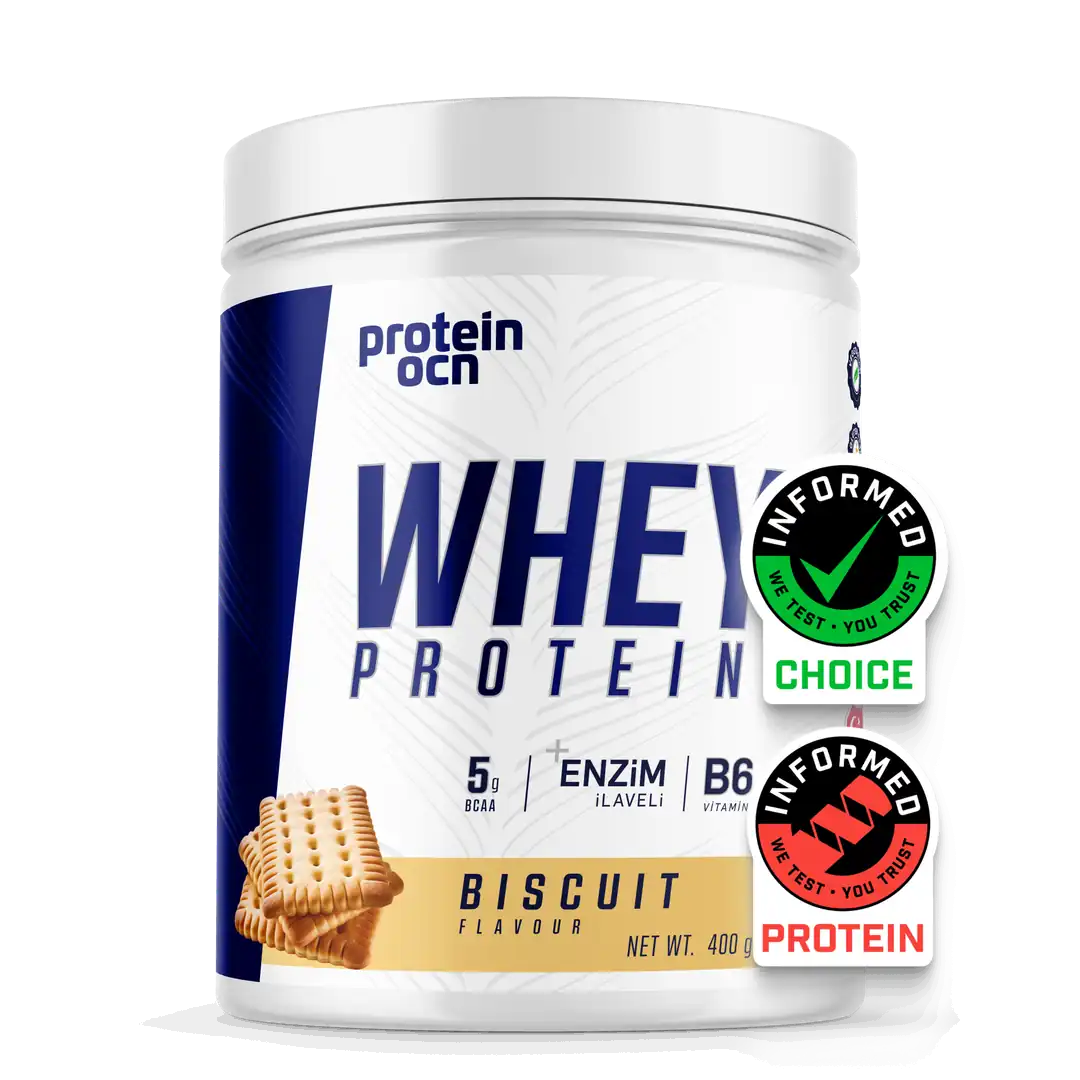
Biscuit · concentrate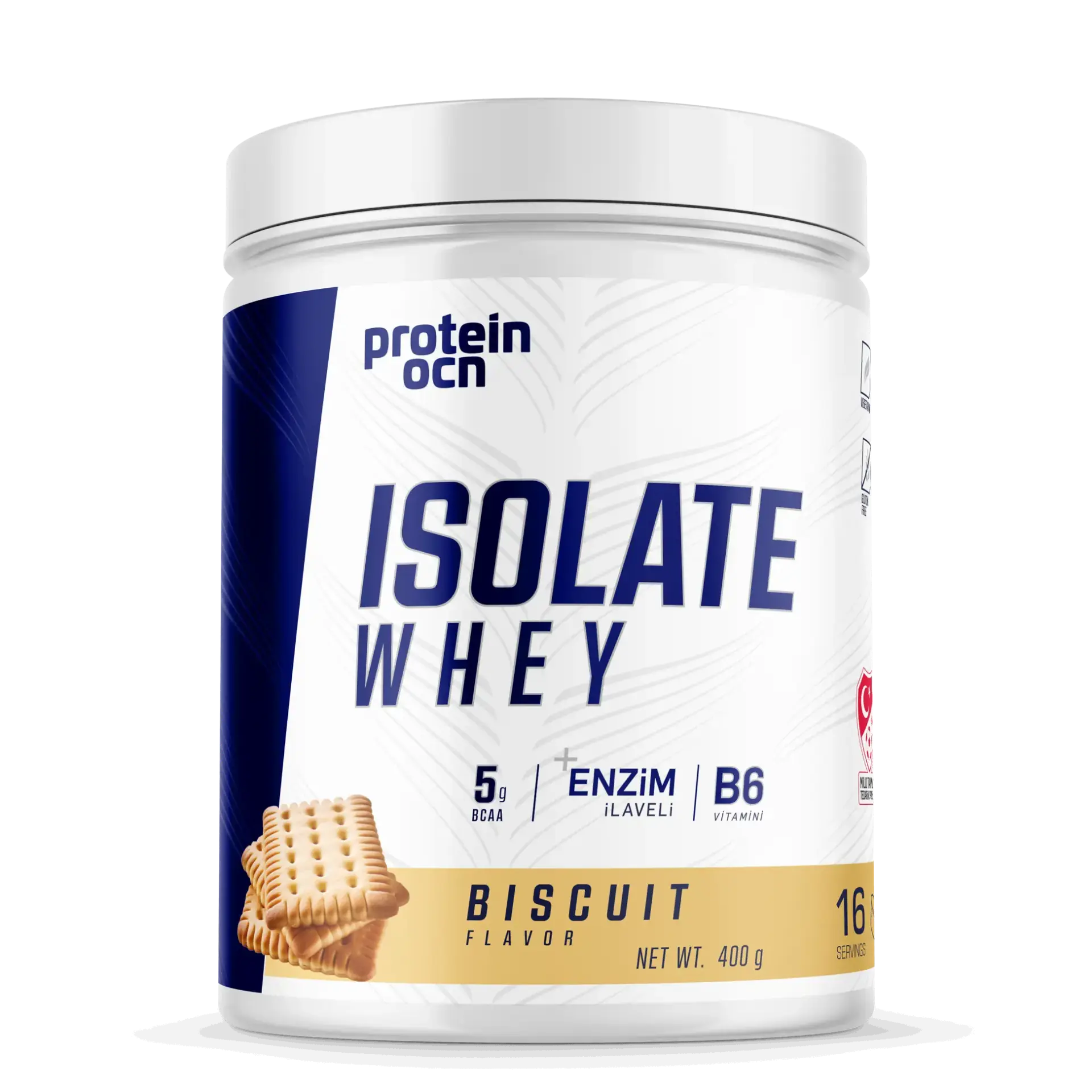
Biscuit · isolate
What’s the difference between concentrate and isolate?
Both start with whey, a protein derived from milk. Whey concentrate retains more of the non-protein components of whey. Isolate is filtered further to increase its protein concentration. That distinction shows up here as 76% versus 88% protein by weight, calculated from the Biscuit label values. These are finished-powder values; the raw ingredient specifications use different definitions and measurement bases.
Both Biscuit formulas list sunflower lecithin, sucralose, DigeZyme® and vitamin B6. The enzyme blend includes lactase. Its presence alone does not establish the lactose content or guarantee digestive tolerance.
Nutrition and value at a glance
| Biscuit, per 25 g scoop | Whey Protein | Whey Isolate |
|---|---|---|
| Protein source | Whey concentrate | Whey isolate |
| Protein | 19 g | 22 g |
| Energy | 86 kcal | 92 kcal |
| Carbohydrates | 1.7 g | 0.6 g |
| Fat | 0.3 g | 0.2 g |
| Saturated fat | 0.2 g | 0.1 g |
| Salt | 0.05 g | 0.20 g |
| Vitamin B6 | 1.4 mg | 1.4 mg |
| DigeZyme® | 50 mg | 50 mg |
| Mixing amount | 200 mL water or milk | 150 mL water or milk |
Isolate supplies about 16% more protein per scoop, with 1.1 g less carbohydrate and 0.1 g less fat. It also has 6 more calories and 0.15 g more salt per scoop in this comparison. If you track a specific nutrient, use the actual label numbers for the flavor and size you buy.
| Biscuit pack | Whey Protein | Whey Isolate |
|---|---|---|
| 400 g / 16 scoops | $35 · $2.19 per scoop | $45 · $2.81 per scoop |
| 1.6 kg / 64 scoops | $135 · $2.11 per scoop | $170 · $2.66 per scoop |
| 400 g pack, cost per 20 g protein | About $2.30 | About $2.56 |
Concentrate is the better value at these prices, even after adjusting for protein. Isolate’s premium buys a more protein-dense scoop. The smaller pack is useful if you want to try a product before buying the larger tub.
Amino acid profile: Whey Protein vs Whey Isolate
The table brings together the published profiles for the two products, in grams per 100 g as listed. For the Biscuit comparison, the Whey Protein figures match the Eurofins report for a Biscuit sample. The Whey Isolate figures come from Protein Ocean’s product table, which publishes a single profile without identifying a tested flavor or lot. The available isolate analysis report measures total protein and does not provide a matched amino acid test.
| Amino acid | Whey Protein (per 100 g) | Whey Isolate (per 100 g) |
|---|---|---|
| Leucine (BCAA) | 7.93 g | 7.6 g |
| Isoleucine (BCAA) | 4.81 g | 5.2 g |
| Valine (BCAA) | 4.59 g | 4.5 g |
| Total BCAAs (calculated) | 17.33 g | 17.3 g |
| Histidine | 1.38 g | 1.9 g |
| Lysine | 7.46 g | 12.9 g |
| Methionine | 1.72 g | 2 g |
| Phenylalanine | 2.6 g | 2 g |
| Threonine | 5.08 g | 6.4 g |
| Tryptophan | 1.45 g | Unlisted |
| Alanine | 3.83 g | 4.2 g |
| Arginine | 1.96 g | 1.1 g |
| Aspartic acid | 8.2 g | 10.9 g |
| Cystine | 1.58 g | Unlisted |
| Glutamic acid | 14 g | 14.7 g |
| Glycine | 1.43 g | 1.5 g |
| Proline | 5 g | 6.3 g |
| Serine | 3.83 g | 4.1 g |
| Tyrosine | 2.36 g | 2.3 g |
What the numbers mean. Leucine, isoleucine and valine are the three branched-chain amino acids (BCAAs). The listed amounts add up to about 17.3 g of BCAAs per 100 g for both products. Concentrate lists slightly more leucine, while isolate lists slightly more isoleucine and higher values for lysine and threonine. The differences describe the published profiles. A matched test would be needed to establish that the same differences apply to the Biscuit tubs on sale.
Leucine helps signal muscle protein synthesis, and the body needs the other essential amino acids to build muscle protein. For choosing between these powders, the clearer difference is on the nutrition labels: 22 g of protein per Biscuit scoop for isolate and 19 g for concentrate. Tryptophan and cystine are unlisted in the isolate table, so their amounts cannot be compared.
What the analysis documents actually show
- Whey Protein, finished Biscuit sample. The Eurofins certificate of analysis completed on 13 April 2026 reports an amino acid profile for a named Biscuit sample. Leucine was 7.93 g per 100 g of sample, equivalent to about 1.98 g per 25 g for that sample. The lab also reported isoleucine and valine. This is an amino acid analysis of a specific sample.
- Whey Protein, ingredients. The Lactomin 80 A specification and Bayolan P80 instant h+k specification describe whey concentrate ingredients. They are supplier specifications, with ingredient characteristics and test criteria.
- Whey Isolate, submitted whey sample. The Ankara Food Control Laboratory report 2400412869/00, dated 24 September 2024, records 87.8% crude protein on a dry-matter basis for a sample identified as “Whey protein, Sample 22.” It does not name a retail flavor or lot. The dry-matter result and the finished-product label are on different bases.
- Whey Isolate, ingredient. The Lacprodan® UltraWhey 90 Instant specification describes a whey isolate ingredient, including composition and microbiological specifications.
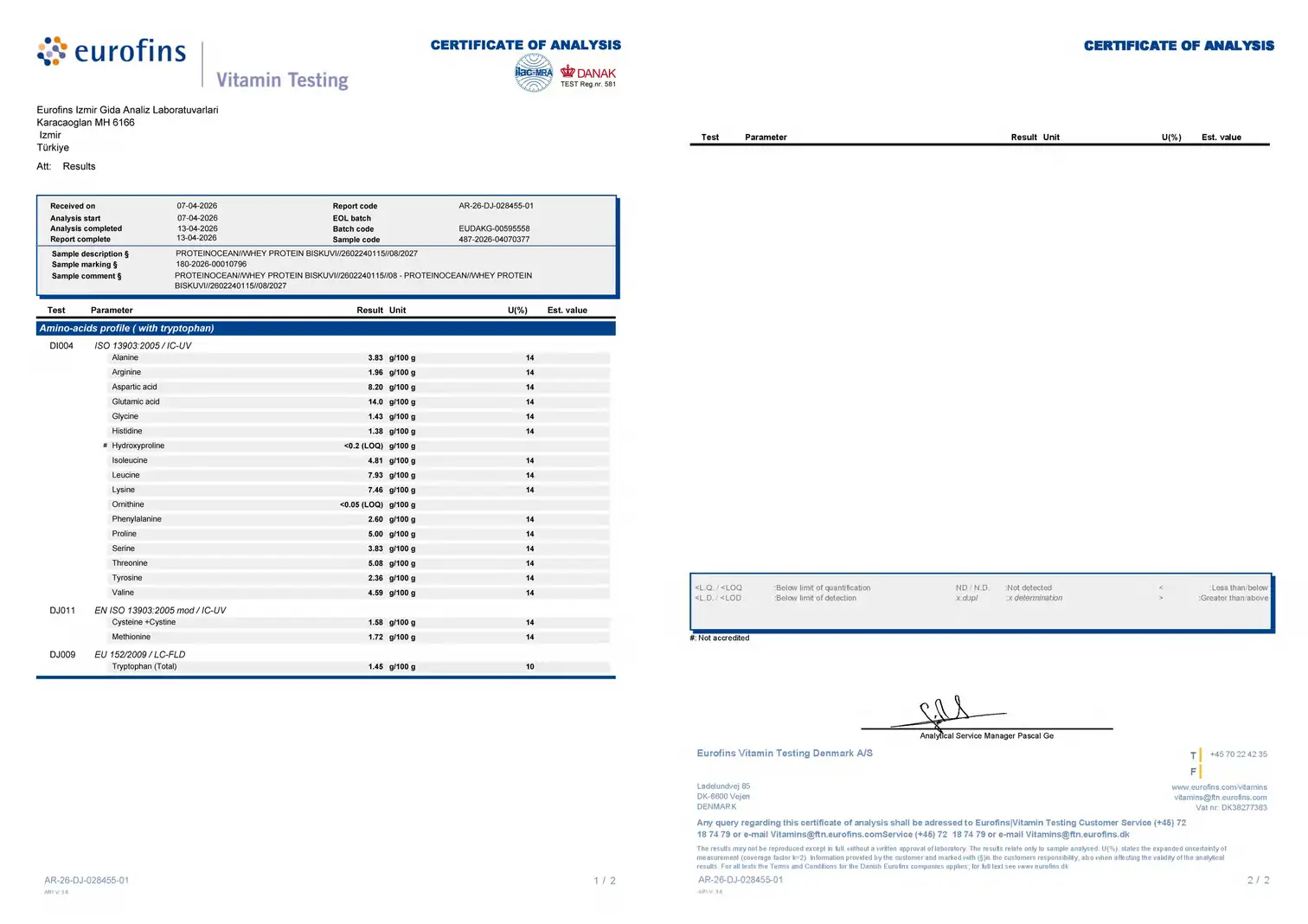
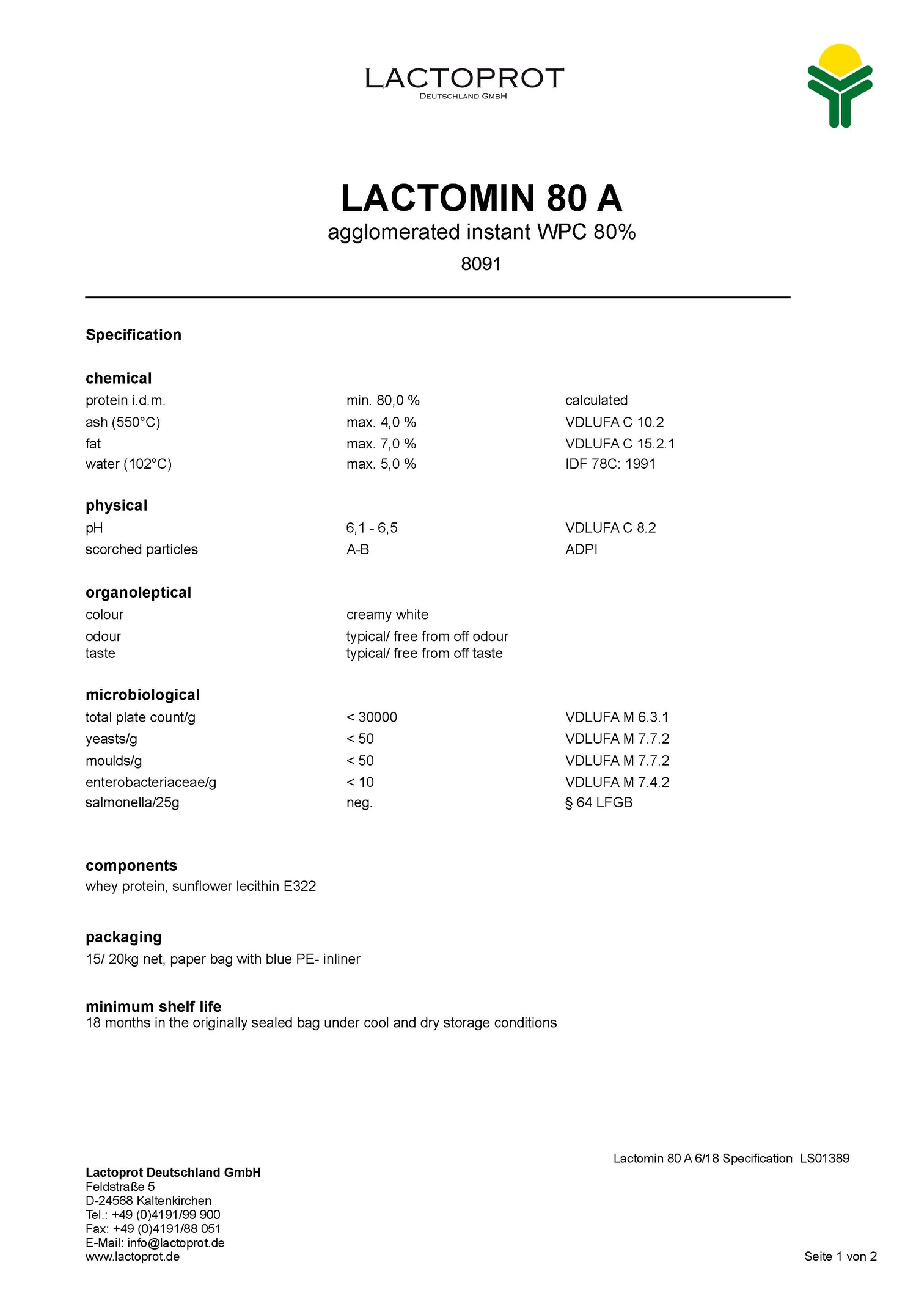
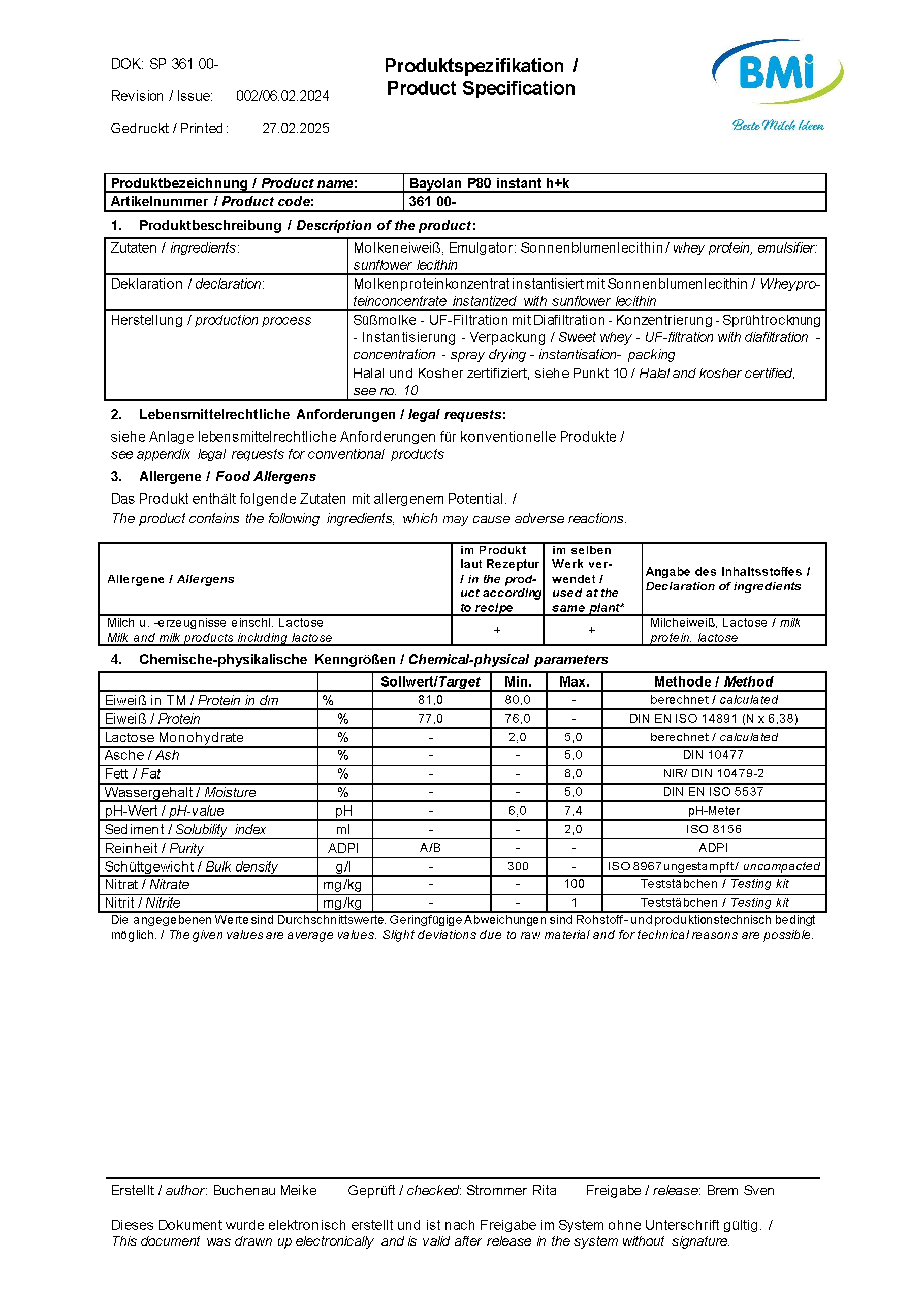
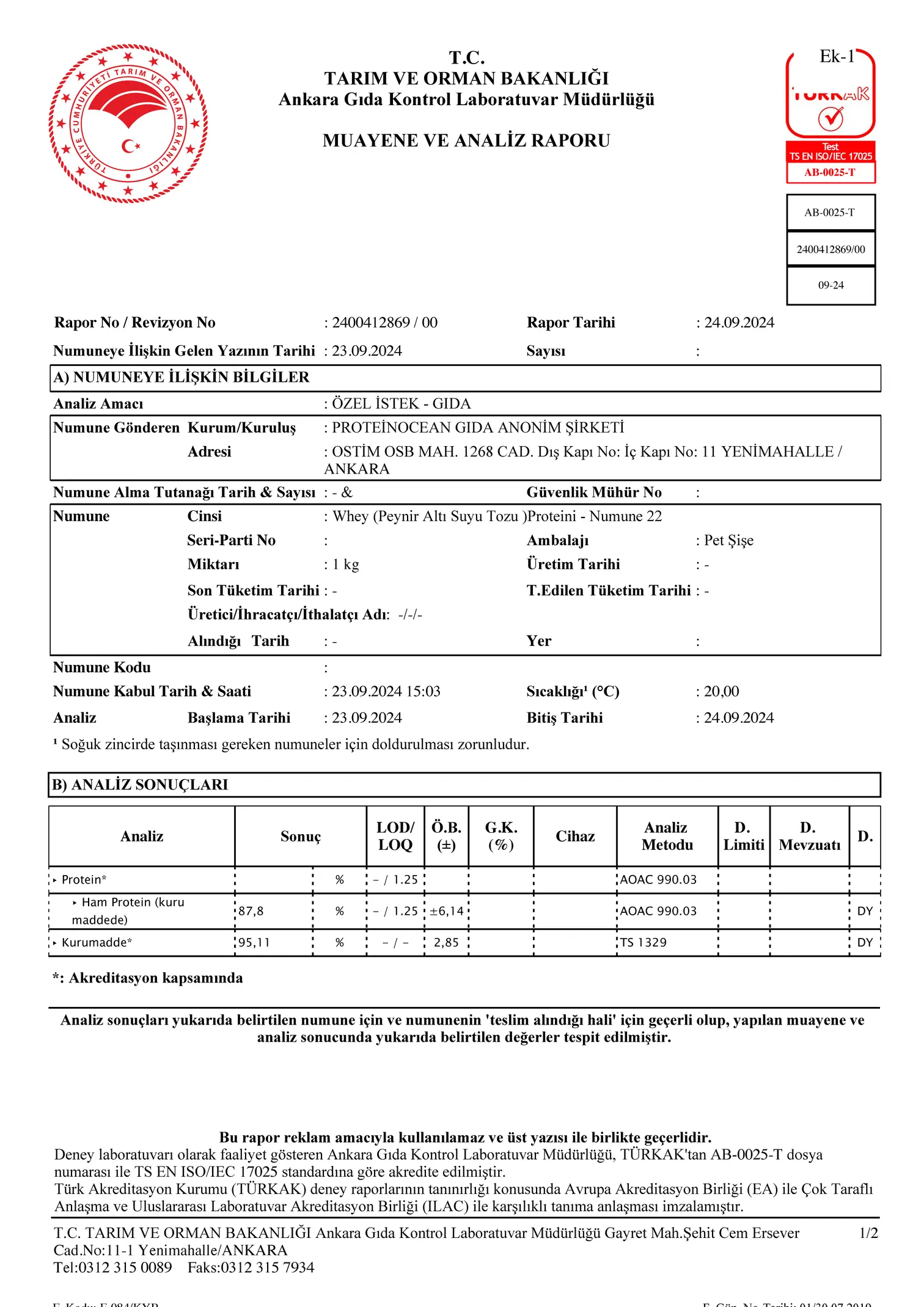
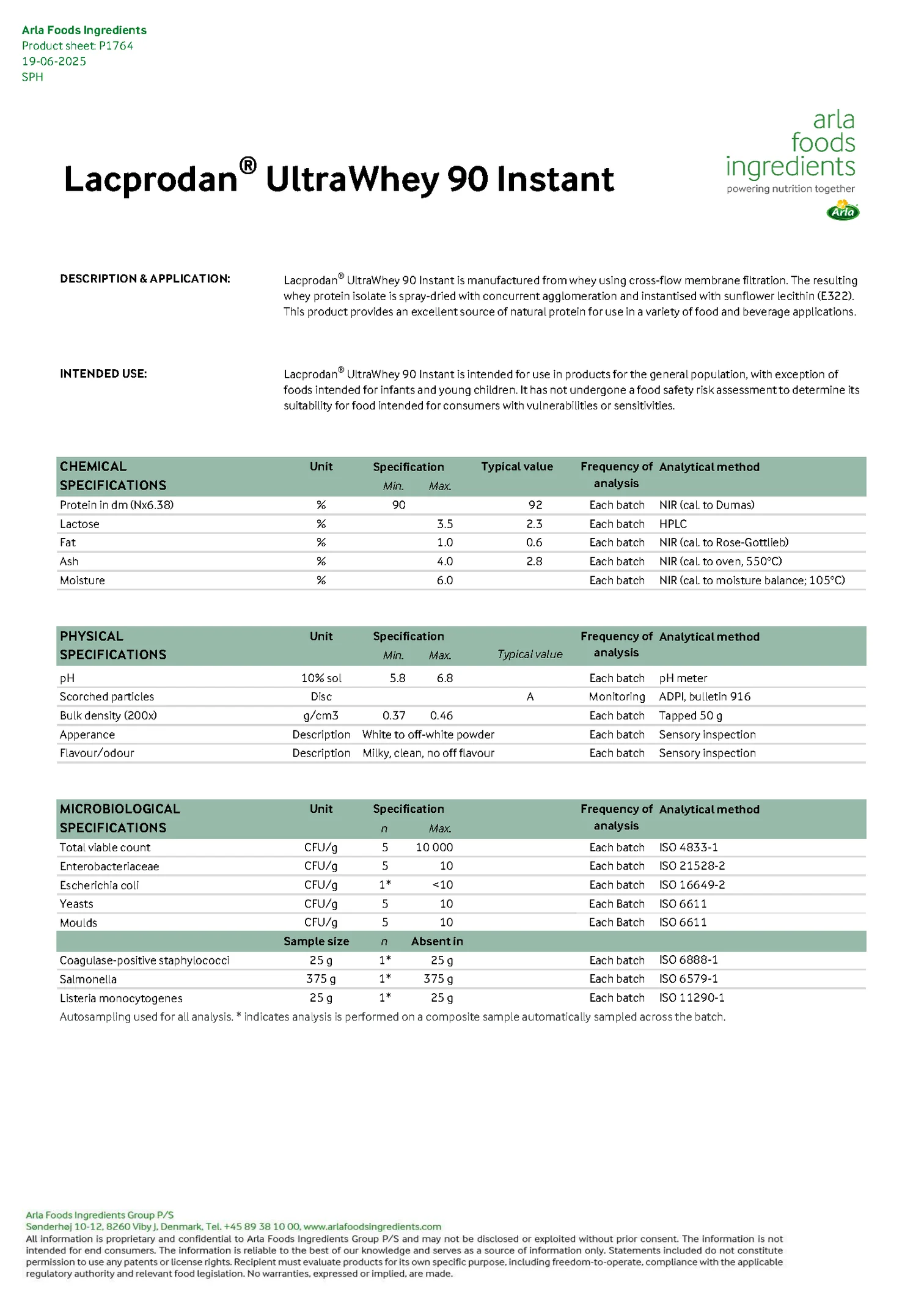
These documents answer different questions. The Eurofins amino acid result, the Ankara dry-matter protein result, and supplier ingredient specifications cannot be used as a head-to-head lab comparison of retail tubs. The label table is the right basis for comparing the two Biscuit products. Check the product’s Whey Protein documents or Whey Isolate documents, and compare lot identifiers with your tub if you need batch-specific evidence.
Benefits and timing: what the research supports
Both provide essential amino acids that your body can use to build and repair muscle. A meta-analysis of 49 resistance-training trials found that protein supplementation modestly improved gains in strength and lean mass on average. The studies evaluated added protein alongside training; they do not establish that either of these two products builds more muscle when total protein intake is matched.
- After training: A shake is convenient when your next protein-rich meal is several hours away.
- Before training: A serving can also fit before a session if you tolerate it comfortably. A narrow post-workout deadline is unnecessary for most people.
- At breakfast, between meals, or on rest days: Use a shake when it fills a gap in your daily intake. There is no need for a scoop if food already covers that gap.
For healthy adults who exercise, the ISSN position stand suggests a general total of about 1.4–2.0 g of protein per kg of body weight per day, counting meals and supplements together. Spread protein across the day and treat the range as general guidance. Individual needs vary.
How to mix it and choose your product
- Pour water or milk into a shaker first: 200 mL for Whey Protein or 150 mL for Whey Isolate according to the product directions.
- Add one 25 g scoop, shake until mixed, and give any foam a moment to settle. Add more liquid if you prefer a thinner shake.
- Count the shake toward your daily protein. Water leaves the powder’s nutrition unchanged. Milk adds its own calories, protein and, unless lactose-free, lactose.
Choose Whey Protein if you want the lower cost per serving and tolerate concentrate well. Choose Whey Isolate if you want more protein and fewer carbohydrates in the same scoop. If lactose is a concern, check the exact label: the reviewed documents do not quantify lactose in either finished Biscuit powder. Both contain milk and should be avoided by people with a milk protein allergy. NIDDK explains the difference between lactose intolerance and milk allergy.